
Introspekt
*
Introspekt *
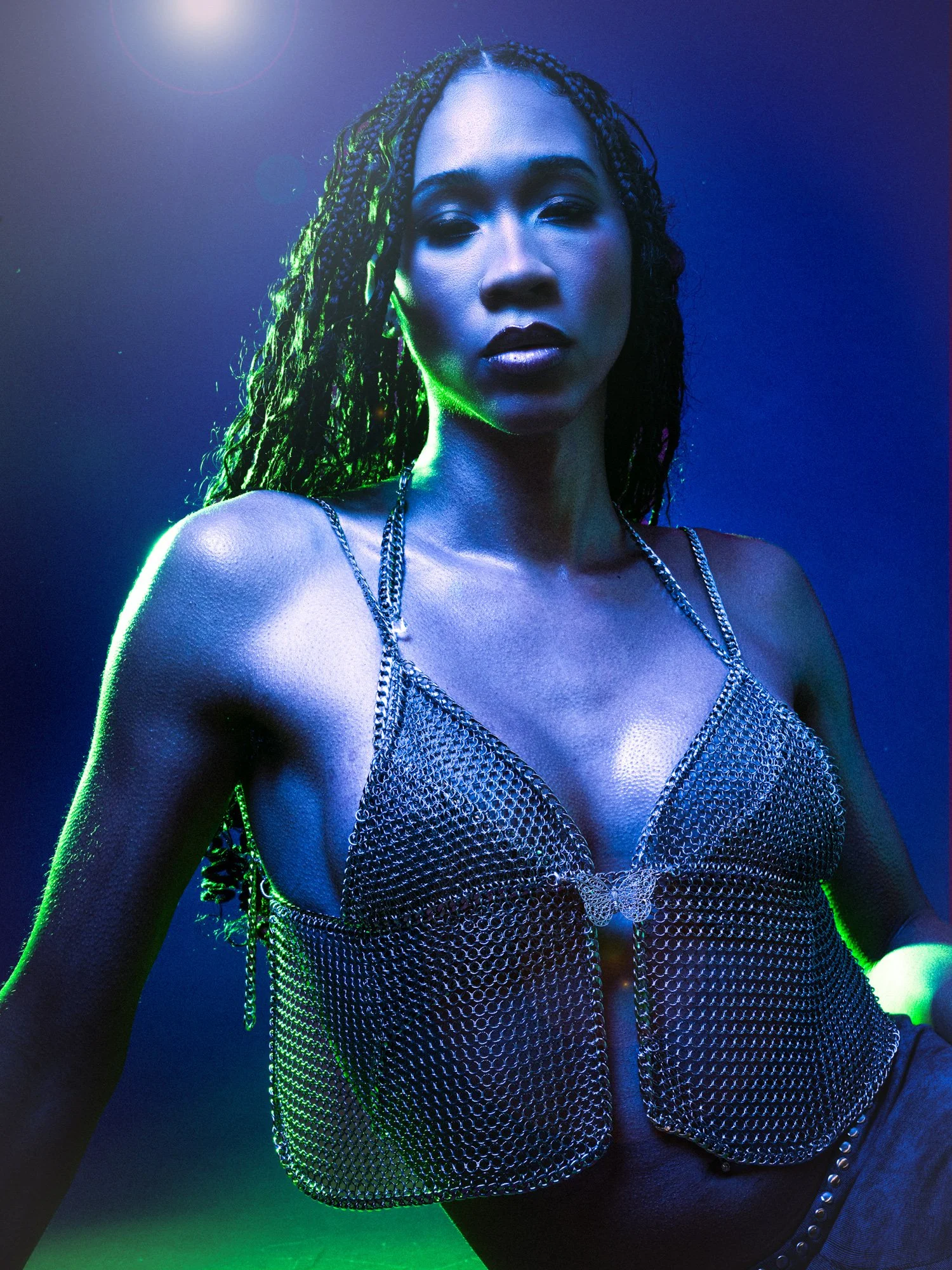
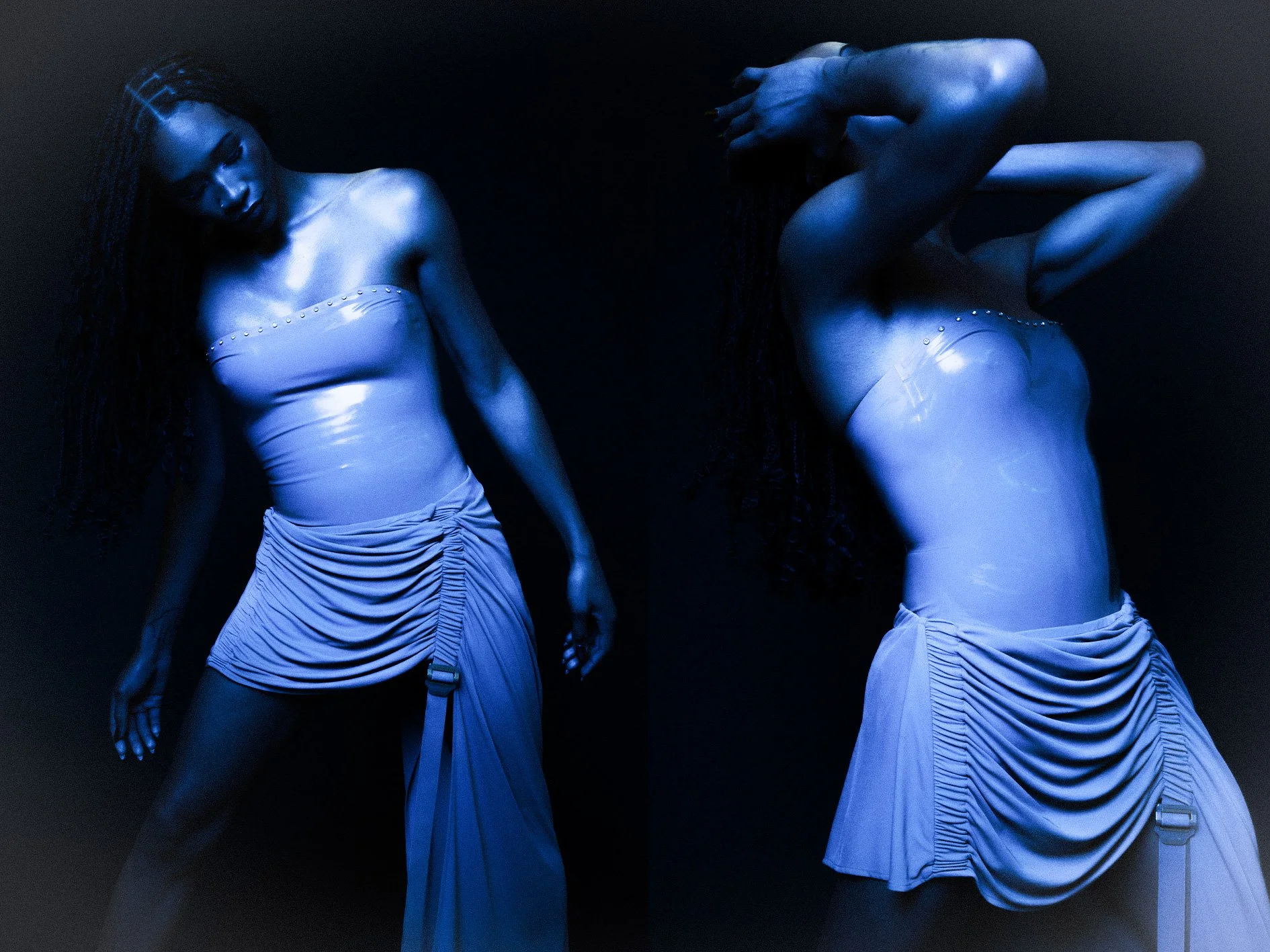
Introspekt is a contemporary club icon, afrofuturist, producer, DJ, sensual provocateur, roots of dubstep recontextualiser, who recently released on T4T LUV NRG and her first album ('Moving The Center') on foundational UK dubstep label, Tempa.
Inspired by Baltimore club, Croydon dubstep, the Paradise Garage's heritage of Afro-Latin rhythms, she conjures up her own sense of space and time, through cycles of rhythm. Her approach to composition and DJ sets is about reimagining the past and also creating a different trajectories of futurity.
![Introspekt - Dekmantel Festival 2026 - [Please Credit Laura van der Spek] - 12.jpg](https://images.squarespace-cdn.com/content/v1/69eb96b643c6a728532e5a01/7eba86c7-a364-43ae-9b5c-0789028dcd58/Introspekt+-+Dekmantel+Festival+2026+-+%5BPlease+Credit+Laura+van+der+Spek%5D+-+12.jpg)
![Introspekt - Dekmantel Festival 2026 - [Please Credit Laura van der Spek] - 7.jpg](https://images.squarespace-cdn.com/content/v1/69eb96b643c6a728532e5a01/29fda92d-1492-4a9e-8279-b641c351d75b/Introspekt+-+Dekmantel+Festival+2026+-+%5BPlease+Credit+Laura+van+der+Spek%5D+-+7.jpg)
![Introspekt - Dekmantel Festival 2026 - [Please Credit Laura van der Spek] - 2.jpg](https://images.squarespace-cdn.com/content/v1/69eb96b643c6a728532e5a01/30a73055-424a-481a-8e11-426c6c52074f/Introspekt+-+Dekmantel+Festival+2026+-+%5BPlease+Credit+Laura+van+der+Spek%5D+-+2.jpg)
-
Meet Introspekt: contemporary club icon, afrofuturist, producer, DJ, sensual provocateur, roots of dubstep recontextualiser. Her debut album is "Moving...." In her world, time is a spiral, so hold on: there's a lot to uncoil.
The roots of Leimert Park
Introspekt grew up in Leimert Park in South Central, LA, one of - if not the - black cultural center of Los Angeles. Set amidst a long political history of pan-Africanism, the Sunday parks were alive with community drum circles and Rastas setting up sound systems to play dub.
"The drum circles every week: I consider that to be my musical upbringing, for sure," she explains. "I would just go and just sit down, watch and dance a little bit." This is where the circles & roots began. And the drums.
Croydon reaches LA
LA circa 2013 and a store called Touch Vinyl brought early dubstep like Mala & D1 into her life, alongside grime. "I was spinning a lot of that stuff and started playing in clubs around the time I was 16 or so. My first gig was opening for Joe Nice. I got kicked out of the club immediately after my set for being underage." In 2016 she released a track via the US dubstep pioneer's label on the Los Angeles EP.
Withdrawal from infection to introspection
But then for a while she withdrew from clubs, and like the rest of the globe, got caught up in the pandemic. Then, as stay at home/lockdown orders faded, she sought out the unity of communal dancing and unwittingly found an entirely new direction.
"The first rave I went to after the pandemic was Eris Drew, Octo Octa, and Bored Lord. That was a pretty influential one for me.
It was actually the first time I had heard UK garage played at a club in LA by someone, not myself, haha".
Encountering the Motherbeat
It's at this point we see her vision as an artist emerge. First by taking inspiration from Drew's "Raving Disco Breaks" methodology of using fragments to create something that's stylistically new, which in Introspekt's case was sampling a lot of old early "roots of..." era dubstep, dark garage stuff and recontextualizing it.
"But I think the real influence from T4T LUV NRG was philosophically. There's this idea of spirituality in their music and I found that really powerful. This idea of, for lack of a better term, a sort of divine feminine presence shining throughout the music."
"Eris Drew talks a lot about 'the Motherbeat.' That's definitely really shaped my music in terms of trying to put that energy at the forefront of it as opposed to what I feel is some masculinist approach to the big baselines," she explains. "Even though my music can be quite energetic and hard in some senses, I always try to keep it a bit sensual and connected to some feminine spiritual energies."
From the seeds of the Motherbeat and early "roots of..." dubstep tracks like "Poison" by Benny Ill & Hatcha EP and influences like Baltimore club and New York's Paradise Garage, she began to build. "That track has got a Baltimore sort of pattern to it, but the dubbiness and then it's got the moaning samples. I think that track is definitely one of the blueprints for my current sound."
Context beyond climax
Once she'd found her own sound, she began to place it in new contexts - queer clubs specifically - that had historically not been exposed to early dark garage and the roots of dubstep. There was a pull to it: a sense of community and artistic kinship.
But also perhaps a push: away from what dubstep had long since become.
"My music is a lot more explicit in what I feel is a corrective to a more masculine, libidinal, sexual politics with the music. I think of the 'big drop' kind of dubstep as mirroring a sexual approach that is really focused on climaxes, as opposed to the sensuality that I'm trying to push with my music. A lot of my music is about anticipation and the push and pull of that. Like building tension, as opposed to these big moments."
"I definitely love a wheel up but I think there's more of an intention around a psychedelic journey around it, or like the sensuality of it, the physicality of the bass and how that makes you feel. I really think about just that physicality and the materiality of that bass weight as sort of a sensual kind of force."
Croydon & the south Circular
This circuitous journey brings us to today and her debut album "Moving the Centre". The title is a reference to "Moving the Centre: the Search for Cultural Freedoms" a collection by the Kenyan author Ngũgĩ wa Thiong'o, but also to her artistic mission.
"It's all about this idea of presenting an alternate perspective, as opposed to that which is more dominant in dance music and in dubstep and bass music. What I'm trying to do is present a narrative of this music that rather than locating things in terms of a central origin point, trying to think about the more polycentric nature of where all these influences are pulling from."
"What I've also been thinking through while making the album is: what are the specific demographics that were present in South London and the different demographic shifts that have taken place in the UK and across different countries from the Caribbean and Africa? The movement of people across space, how did that influence the sound?
"I'm really trying to center that polycentric, global orientation of the music. For me, specifically, focusing on the influence of the African diaspora to the Caribbean and also with continental Africans. That's a huge touching point for what the album is all about."
It's fitting that this visionary project, inspired by tracks like "Poison", is being released on foundational roots of dubstep label Tempa, the label that gave us Benny Ill's Horsepower Productions. If you go back to "In Fine Style," it's straight out of Croydon, or in that case Purley but it's also a totally global piece of work, like an atlas of US, African, Jamaican and Indian influences.
"Moving the Centre" explores this further.
Afrofuturism & alternative timelines
As we dig into the album's rhythms, as much inspired by Baltimore club, Croydon, Paradise Garage's heritage of Afro-Latin rhythms, she conjures up her own sense of space and time, through cycles of rhythm.
"In my music I think a lot about alternative timelines. A lot of it is about reimagining the past and also creating a different trajectory or future. That's the way that I interpret Afrofuturism - the idea of imagining black futures through art - into my music."
"My music is also taking from a lot of West African cosmological ideas about time... there's this idea of time as a spiral and as open-ended. I think that's behind the impulses towards the ways that I use samples. I want my music to sound as though you can't exactly locate.”